Writing
I'm not a designer, so I ran an AI design council
Six rounds of AI critique on real renders, and the one call I made against the critics.
Hector Andres Acosta Pozo · · 7 min read
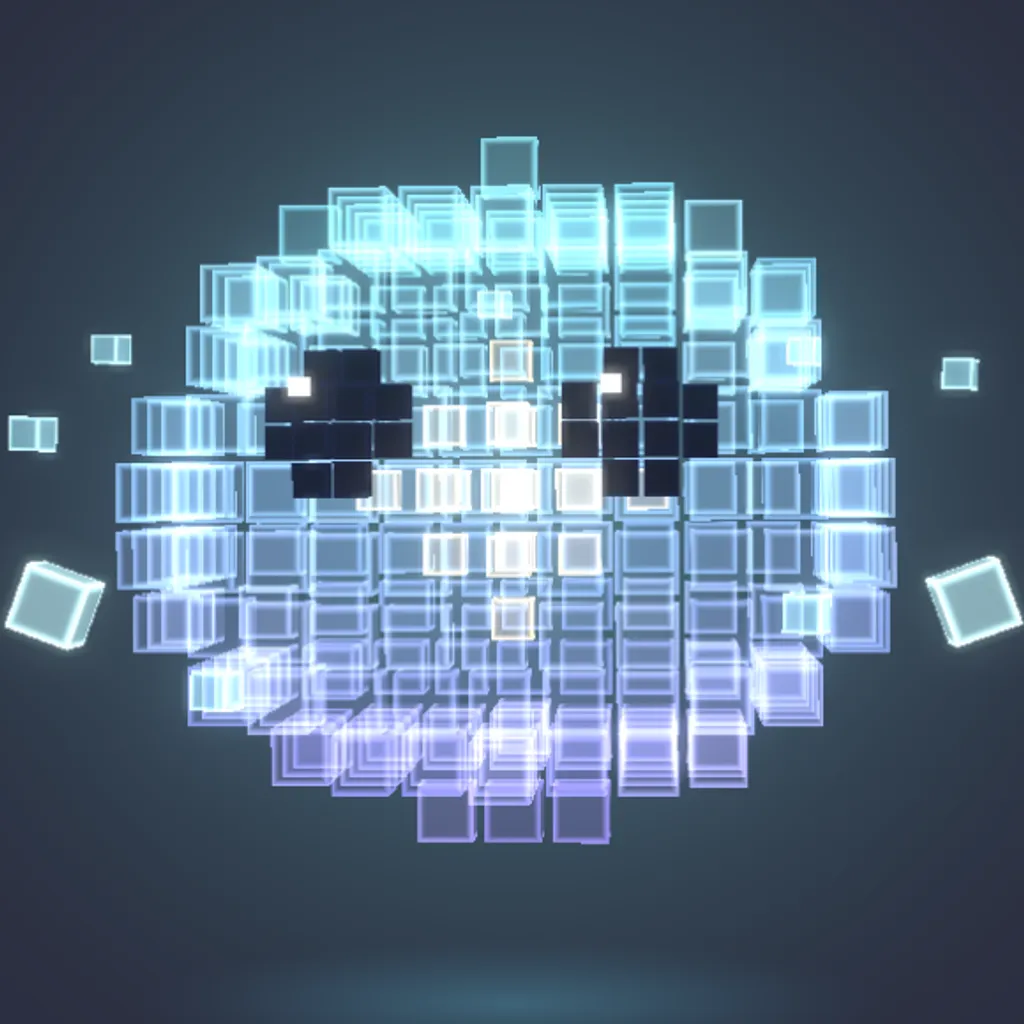 First version
 Round 6, shipped
The first version of Laura’s face was my idea, and I didn’t like it. I had asked for something specific: “instead of a circle it is a 3d floating character… pixel cubes with a bit of luminance and transparency”. What showed up was a translucent aqua and lavender gumdrop, cubes orbiting it, bloom on everything. The idea was right. The look wasn’t, and I couldn’t say why.
So I set up an AI design council and stayed the one who decides. Six rounds later, in one evening, she had a face.
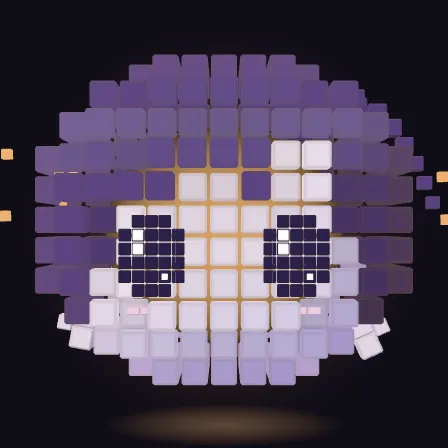 Round 14 · 4.5 · 3.5
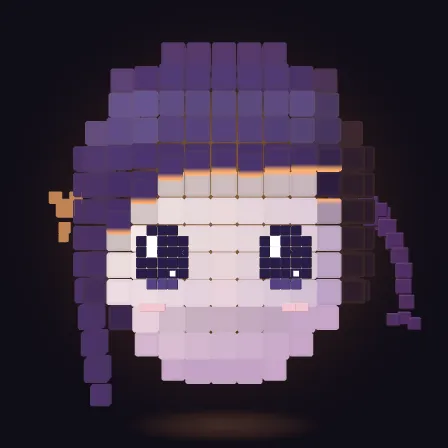 Round 25 · 6.5 · 5
 Round 36 · 7 · 6
 Round 47 · 7.5 · 7
 Round 57 · 7.5 · 7
 Round 67 · 7.5 · 7.5
A glowing blob of cubes
Most assistants get a glowing circle. I wanted a character, and the prototype was real three.js code in the app, not a mockup.
Laura is my private, bilingual voice assistant for my phone and watch. The code is public at github.com/hectorandac/laura-voice.
I knew it wasn’t good, and I didn’t know how to make it good. I work in computer vision and edge AI: I can tell you why a detector misses small objects, not why a face looks cheap. What I could build was a process: roles, a brief, renders and checks.
What I did, and what the agents did
“AI made my avatar” isn’t true, and “I designed it” isn’t either.
I designed the process: the roles, independent proposals, one brief, fixed rounds, and the rule that only renders from the real app count. The concept was mine. After round 3, my note reset the priority to the jaw and asked for bigger leaps. The ship call was mine.
The agents wrote the proposals, critiques, fix lists and all of the three.js code, and built the checks and the render workbench.
I didn’t draw a single cube.
A council of critics and designers
Each role was an AI agent with one lens:
- A style critic, acting as art director: shape, value, color.
- A UX critic for voice assistants: does she read at 120 px over another app, are her states distinct in grayscale.
- A concept critic, acting as creative director: who Laura is, and whether she stays one character on the phone, the overlay and the watch.
- A designer who wrote the code. From round 4, that became three lanes (face, hair and silhouette, light and material), merged each round.
The critics judged only rendered stills from the real renderer, against the brief, and each wrote its own score and findings before the concept critic merged them into one fix list.
Each critic first proposed independently, and they landed close: opaque cubes, light from inside, one asymmetric signature. That became one brief, “Lantern”: a porcelain voxel girl with a warm inner light, a plum hair cap and a ponytail.
The brief settled disagreements with a reason. Style wanted glowing eyes; the other two wanted dark, glossy ones. The brief picked dark eyes: glowing eyes read as a robot visor, dark eyes on pale skin keep at least 4.5:1 contrast, and a workbench check failed any eye or mouth contrast under 4.5:1.
The loop: build, render, critique, fix
Every round, the designer changed the real three.js avatar; the workbench rendered the same fixed sheet (every state in color and in grayscale, black silhouettes, her real bubble size over a busy phone screen), growing from 16 images in round 1 to 34 plus jaw close-ups by round 6; each critic scored it out of 10; and the concept critic wrote the next fix list.
Each round × 6
- Implement in the app's three.js code
- Render a fixed sheet: angles, states, 120 px, grayscale
- Three scored critiques: style, UX, concept
- One prioritized fix list
Nobody judged a mockup. Every score came from pixels drawn by the renderer that ships. Round 6 draws her in at most 4 draw calls (3 on the light themes) and 420 cubes, which matters on an always-on bubble and a watch.
 Idle
 Listening
 Thinking
 Speaking
 Sleeping
 Error
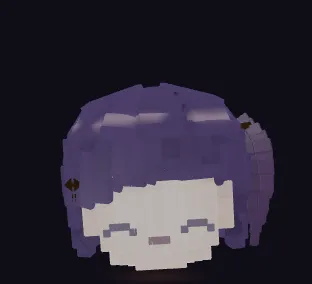 Offline
 Unknown voice
Six rounds in one evening
The style critic gave round 1 a 4 out of 10: a “purple pixel ball wearing a white face-mask”. At round 3 the concept critic called it “the first iteration where the small sizes pass”: she read as “a cute girl with a bob, not a head in a beanie”. Round 6, in the council’s words, was “the first round where the change shows at thumbnail size without a diff”.
Scores as a table
| Round | Style | UX | Concept |
|---|---|---|---|
| 1 | 4 | 4.5 | 3.5 |
| 2 | 5 | 6.5 | 5 |
| 3 | 6 | 7 | 6 |
| 4 | 7 | 7.5 | 7 |
| 5 | 7 | 7.5 | 7 |
| 6 | 7 | 7.5 | 7.5 |
Scores rose every round through round 4, then flattened: after round 4, only one critic’s score moved, by half a point, because round 6’s new jaw hair cost about what the rest gained. My feedback came after round 3, and round 4 is also when the designer became three lanes, so I can’t credit any one change.
Six rounds to reach a 7? The critics scored against a “wow” bar on purpose. What matters is around 4 to around 7 in one evening.
Making the loop fast
Round 4 was also when the workbench was rebuilt. Rendering had become the bottleneck: the full sheet took 191.6 s, one still after another, so every “did that help?” cost more than three minutes. The new workbench renders the stills in parallel on a warm pool of headless browsers. Animation runs on a virtual clock that steps exactly 1/60 s per frame, with a fixed random seed per still, so a before/after diff shows only real changes.
| Task | Time |
|---|---|
| Full sheet, before | 191.6 s |
| Full sheet, after | 18–21 s |
| One preset (sides, face, jaw, hero, overlay) | 0.8–4.1 s |
| Quick preview | 7.7 s |
| Before/after compare | 0.5 s |
I saw a beard
After round 3, two things bothered me. The first was a gray band under her mouth and cool shading at the jaw corners. One critic had noted a “muzzle band” among many other notes. To me it was the first thing I saw: “make sure the lower part of the head doesn’t look like a shading beard.” The second was the pace: “this attempt looked incrementally better”. That wasn’t praise. I wanted bigger leaps.
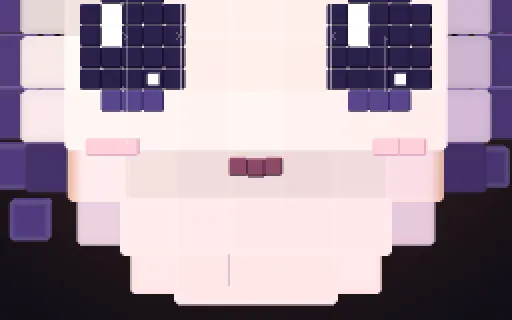

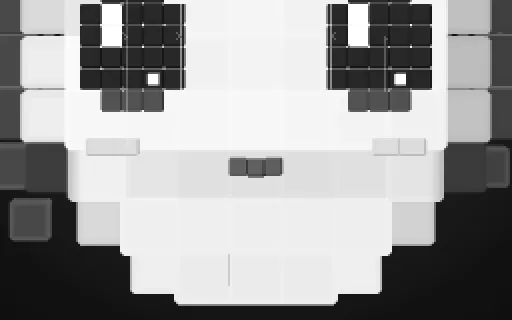
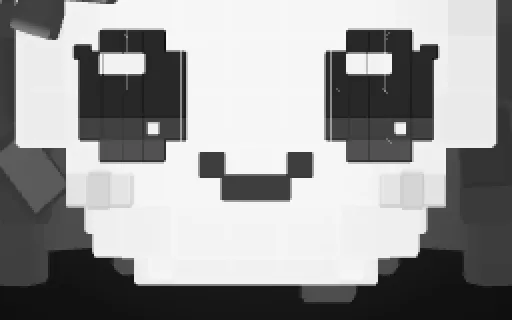
My note made the beard the top fix. The critics added jaw close-ups and a beard check: a script, not a critic. Each still is also rendered with flat material colors, so it knows which pixels are skin. It walks the skin row by row from the eye line to the chin and fails on dark steps (for example, a lightness drop of more than 1.5 L* between rows; L* runs from 0, black, to 100, white).
The exact thresholds
A still fails the beard check if any of these is true:
- Lightness drops more than 1.5 L* from one row to the next, or more than 2.5 L* in total.
- A jaw corner is darker than L* 85 (80 on the light themes).
- More than 0.5 % of the skin turns cool (bluish or lilac).
- More than 2 % of the skin drifts off-hue.
By round 6 the skin was clean: all three critics agreed, and the beard check passed 40 of 40 stills.
They still never called the beard fixed: one of three at round 4, two at round 5, none at round 6. The round 6 hair work had added a cube under the chin, a gray lock tip beside it and a strand under the jaw at 3/4. The critics said these “still read as a beard”, some even at 120 px. The check couldn’t see that by design: it only looked at skin. Their plan was one more pass, beard first, with sign-off only when all three agreed.
 hair cubegray lock tip

I looked at the same stills at the size she is actually shown. The gray shading was gone. What was left were a few hair cubes: real, but at that size they didn’t read as stubble to me. That’s a taste call, not a measurement, and I made it against three critics. I shipped round 6.
“Not perfect” and “not ready” are different calls, and that one was mine.
This is a familiar ML evaluation problem. The critics were LLM-as-judge with a rubric; the beard check was a metric. The metric said pass and the judges said not yet, and each was right about what it measured. I settled it the way you settle an eval disagreement before release: pick the condition that matters, her real size on screen, and look myself.
Same face, native code: proving the port matches
The floating bubble and the watch already used a separate native OpenGL ES renderer, and it still drew the old blob. After round 6 it was ported to the new model. A rule in the brief made that feasible: every feature had to be buildable from instanced cubes and one shader. The port is generated from exported model data, not redrawn by hand, so she doesn’t drift into a second character.
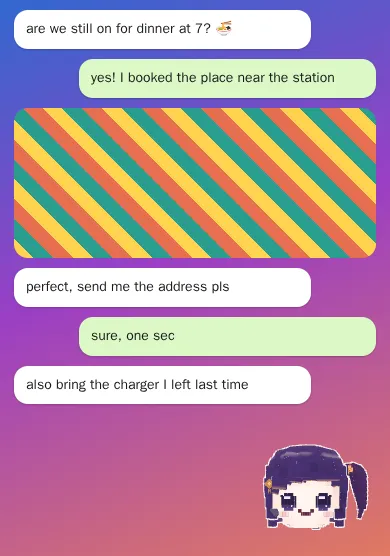
A golden test holds the two together. 20 cases (states, reactions, bubble size) are stepped in the WebView and saved. The native model steps the same cases, and every cube’s transform, color and material values match within 1e-4. Real frames agree too: a mean difference of about 0.15/255 on phone frames.
 WebView (three.js)
 Native (OpenGL ES 3)
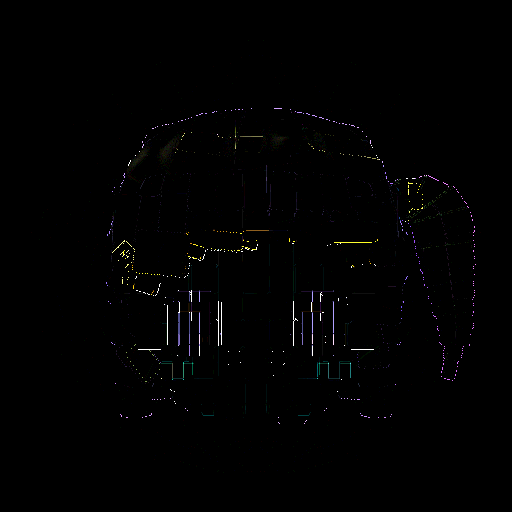 Difference ×16
What didn’t work
- The hero view. The council’s round 6 summary: “No ‘wow’ at hero size yet.” I judged the ship call at her real bubble size, so the large view is still open.
- The checks. The beard check sampled only skin, so it passed 40/40 with hair on her jaw. The fix, a
jawringcheck for any non-skin pixel on or under the jaw, was planned for the next pass and never built. - Merging. All three lanes edited one renderer file, so merging, not compute, was the bottleneck. More designers or more compute wouldn’t have helped.
What I’d tell another engineer
I’m still not a designer, and I didn’t need to become one. Three things carried this:
- Give critics different lenses, and make them judge the real renderer’s output. Style, UX and concept critics disagree usefully.
- A check shows what it measures, and its misses need a person. The beard check passed with hair on the jaw.
- Keep the ship decision human. Strict critics will keep finding one more thing. Someone has to decide when it doesn’t matter at the size people see.
Laura has a face now. I didn’t draw it; I decided what good meant and when it was good enough. The code, the prototype renders and the native parity images are public at github.com/hectorandac/laura-voice.
I’m an ML engineer working on computer vision and edge AI, and I’m looking for ML roles in the US. If you’re hiring for computer vision or on-device ML, here’s my resume, or find me on LinkedIn.